Applications begin after the biotechnology workflow
The principles-and-processes chapter explains how DNA can be handled; applications ask what a biological product or modified organism is intended to do. Keep the two chapters connected but distinct. An enzyme, vector or host cell is part of a method. A therapeutic protein, an insect-resistant crop or a diagnostic approach is an intended use of that method.
For revision, sort each application by its target and purpose: a health-related product, a crop trait, a diagnostic use, or a broader biosafety and ownership question. This prevents a familiar word such as 'gene' or 'plasmid' from being treated as an application in itself.
Health-related applications: distinguish product from method
Recombinant DNA methods can enable cells to produce a selected protein. In the NCERT context, recombinant human insulin is a useful example of a biotechnology-derived product. The study point is the relationship: genetic information is introduced into a suitable production system, and the desired protein is recovered after appropriate processing. It is not a guide to treatment, dose, or personal health decisions.
Gene therapy is discussed as an application of introducing a functional gene into cells to address a genetic condition. At NEET revision level, keep the idea separate from routine drug administration and avoid extending it into claims about individual medical outcomes. The question is usually about the category of intervention or the sequence of a biotechnology application.
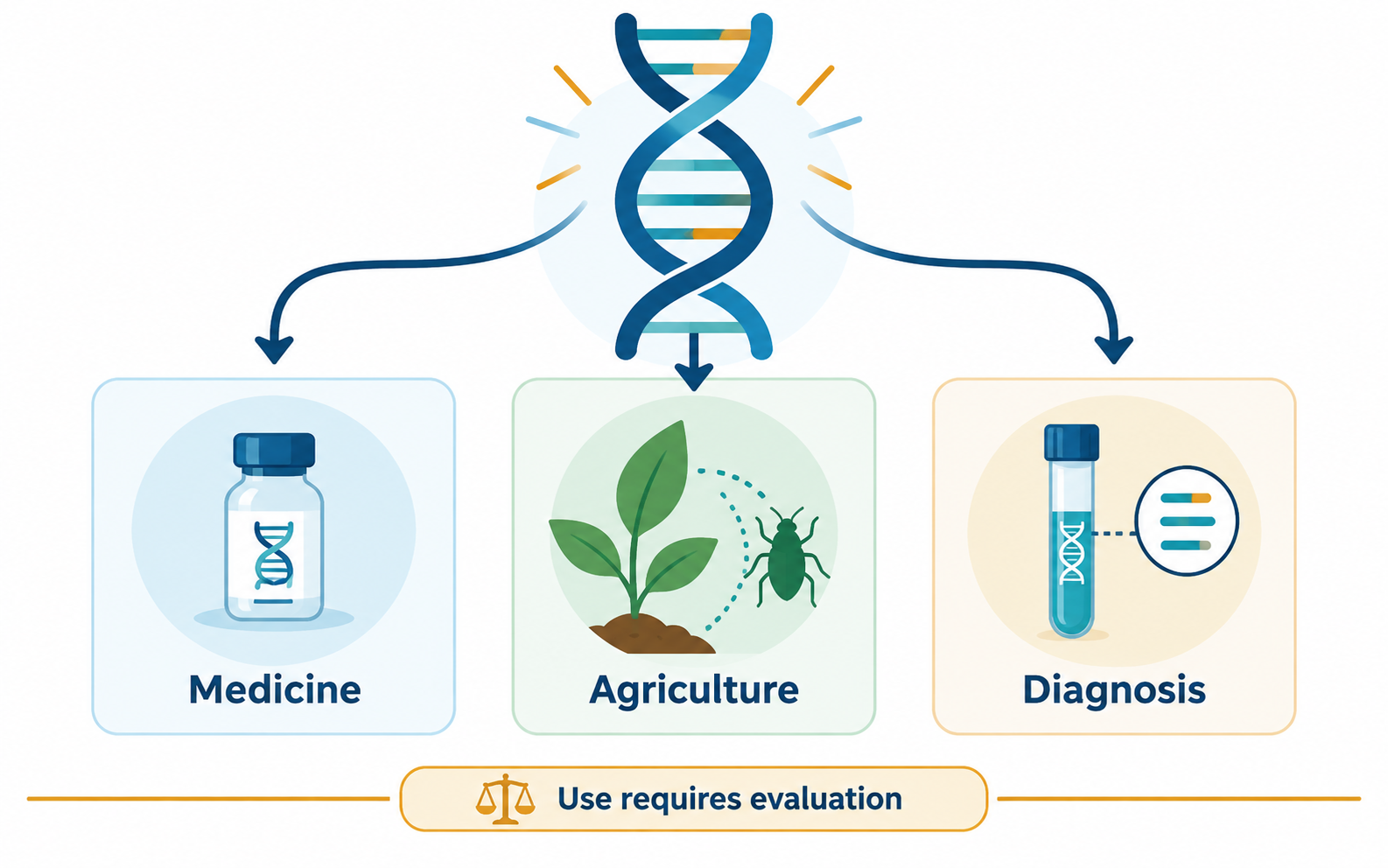
The purpose-and-boundary check
For each example, say what is made or changed, what purpose is stated, and which wider question the chapter asks you to keep in view.
- Recombinant DNA technology can support production of a selected biological protein.
- Bt crops are discussed through a specified insect-pest-control trait, not as a universal crop solution.
- Gene therapy is a gene-based application category, not a synonym for every medical treatment.
- Biosafety, biopiracy and patents concern responsible use, resources and ownership.
A useful application includes a purpose and a responsibility question
It is tempting to learn biotechnology applications as a celebratory list of products. The chapter is stronger than that: it also asks what trait or product is intended, what biological system is involved, and why evaluation or ownership questions may arise.
Keeping those parts together prevents two opposite mistakes: treating every application as risk-free, or treating a responsible-use question as proof that the biological method has not been defined. In revision, name the application first, then its boundary.
Applications: purpose, example and boundary
Place an example in its purpose category before adding the method that made it possible. This keeps products, traits and policy terms from becoming interchangeable.
| Application area | NCERT-linked example | What is being used or changed | Boundary to remember |
|---|---|---|---|
| Health-related product | Recombinant human insulin | A selected protein is produced using recombinant-DNA methods | Not personal treatment advice |
| Agricultural trait | Bt crop | Plant carries a trait associated with insect-pest control | Not resistance to every pest or condition |
| Gene-based intervention | Gene therapy concept | Functional genetic information is introduced into cells | Not the same as ordinary drug administration |
| Governance question | Biopiracy and patents | Use, ownership and benefit-sharing are considered | Not a laboratory tool or crop trait |
Agricultural applications: name the trait and the biological reason
A genetically modified crop carries a deliberately introduced or altered genetic feature. In the familiar Bt-crop example, a gene associated with Bacillus thuringiensis is used so that the plant can produce an insecticidal protein active against specified insect pests. The useful distinction is between an organism engineered for a trait and a chemical pesticide applied from outside.
A crop trait should always be read with its stated target. Resistance to one pest does not mean a plant is automatically resistant to every disease, drought condition or herbicide. Overbroad statements are a common source of error because they replace a named trait with a general claim that biotechnology makes every crop better.
Biosafety, biopiracy and patents are part of the chapter boundary
Biotechnology applications are not only about what can be made. NCERT also frames questions of evaluation, biosafety, biopiracy and patents. A useful study distinction is that biosafety considers possible effects and responsible use, while a patent concerns legal rights over an invention or process. Biopiracy refers to the unauthorised use of biological resources or traditional knowledge without fair recognition or benefit-sharing.
For a final recall routine, make four cards: product, crop trait, diagnostic use and governance question. Place one chapter example under each card, then explain why it belongs there. Finish by linking back to the recombinant-DNA guide: the workflow supplies a method; an application supplies a purpose and a context for evaluation.
Common confusions to check
- A biotechnology application is not the same thing as a laboratory tool such as a vector or restriction enzyme.
- A named crop trait should not be enlarged into a claim of resistance to every pest or environmental condition.
- Gene therapy is a gene-based application category, not another name for routine drug treatment.
Editorial note and disclaimer
Written by: DongFeng. Published by: MedQGo. Last updated: September 18, 2026.
Disclaimer: This guide is a revision aid for NEET-UG aspirants and does not constitute medical advice. For clinical or health-related queries, consult a qualified medical professional.
References
Related revision guides
How to use this guide
Read the relevant NCERT chapter first. Then redraw the relationships or process described here from memory, compare your version with the textbook, and correct only the gaps. This is an independent revision aid, not official NCERT, NTA, or NEET material.